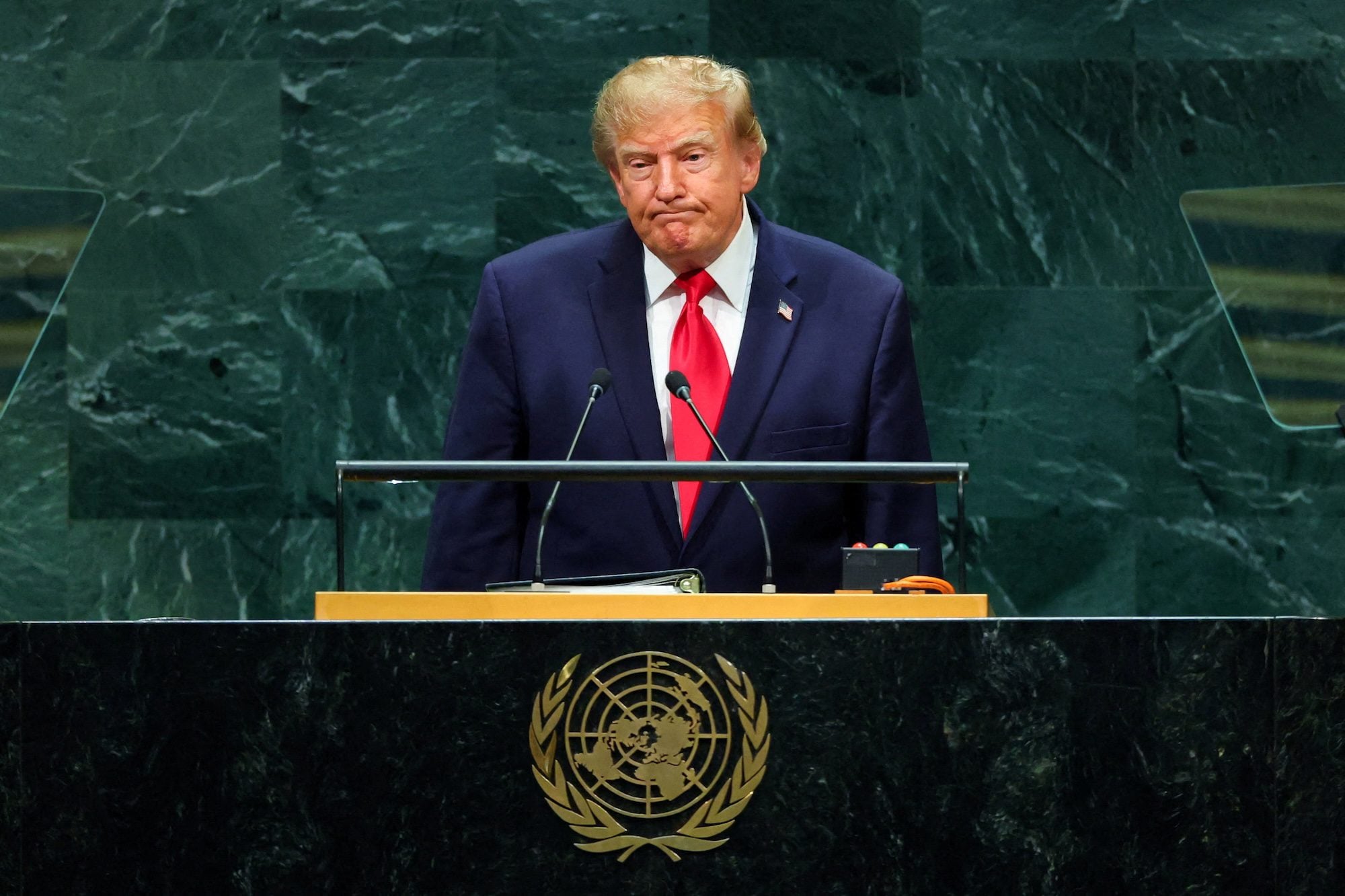
US President Donald Trump urged countries to cut Iran off economically at the UN General Assembly on 22 September, despite a conditional Iranian offer to reopen the Strait of Hormuz. According to Reuters reporting carried by gCaptain, Trump gave no indication of an imminent return to negotiations, instead predicting an agreement after November’s US midterm elections.
A senior Iranian official told Reuters that Tehran could restore access for Gulf shipping within seven days if Washington reduced military pressure and removed its blockade of Iranian ports. The official said mediators had delivered Iran’s latest proposal to the US the previous week. Tehran also wanted Washington to formally commit to a diplomatic solution and agree a timetable.
The competing positions leave unresolved the disruption to a waterway that carried a fifth of worldwide oil and gas shipments before the war, according to the report. The conflict has lasted almost seven months, and no direct US-Iran meetings are known to have occurred since July, when an interim agreement collapsed weeks after signing. US Secretary of State Marco Rubio said Washington remained willing to talk if discussions offered prospects for progress.
Trump was scheduled to meet leaders from Bahrain, Kuwait, Qatar, Oman, Saudi Arabia and the United Arab Emirates on Tuesday. The six Gulf states want Hormuz traffic restored but remain concerned about strengthening Iran’s regional position. Regional sources said the meeting’s agenda included a Qatari proposal for a shared security framework involving Iran and the Arab Gulf states; one source said Tehran was considering it.
Saudi export infrastructure offered some relief to oil markets. Sources told Reuters that operations had restarted on the East-West Pipeline and that exports from Yanbu on the Red Sea could resume within hours, although at lower volumes. The pipeline, an alternative to shipping through Hormuz, had closed following attacks that Riyadh attributed to Iranian allies in Iraq.
Risks also persisted around Saudi Arabia’s Red Sea outlet. Iran-aligned Houthi forces had advanced against Saudi-backed government troops in Yemen and were seeking control of the Kahboub Mountains overlooking the coast, the report said. Their advances and missile and drone attacks on Saudi Arabia added pressure to export routes already constrained by the conflict.