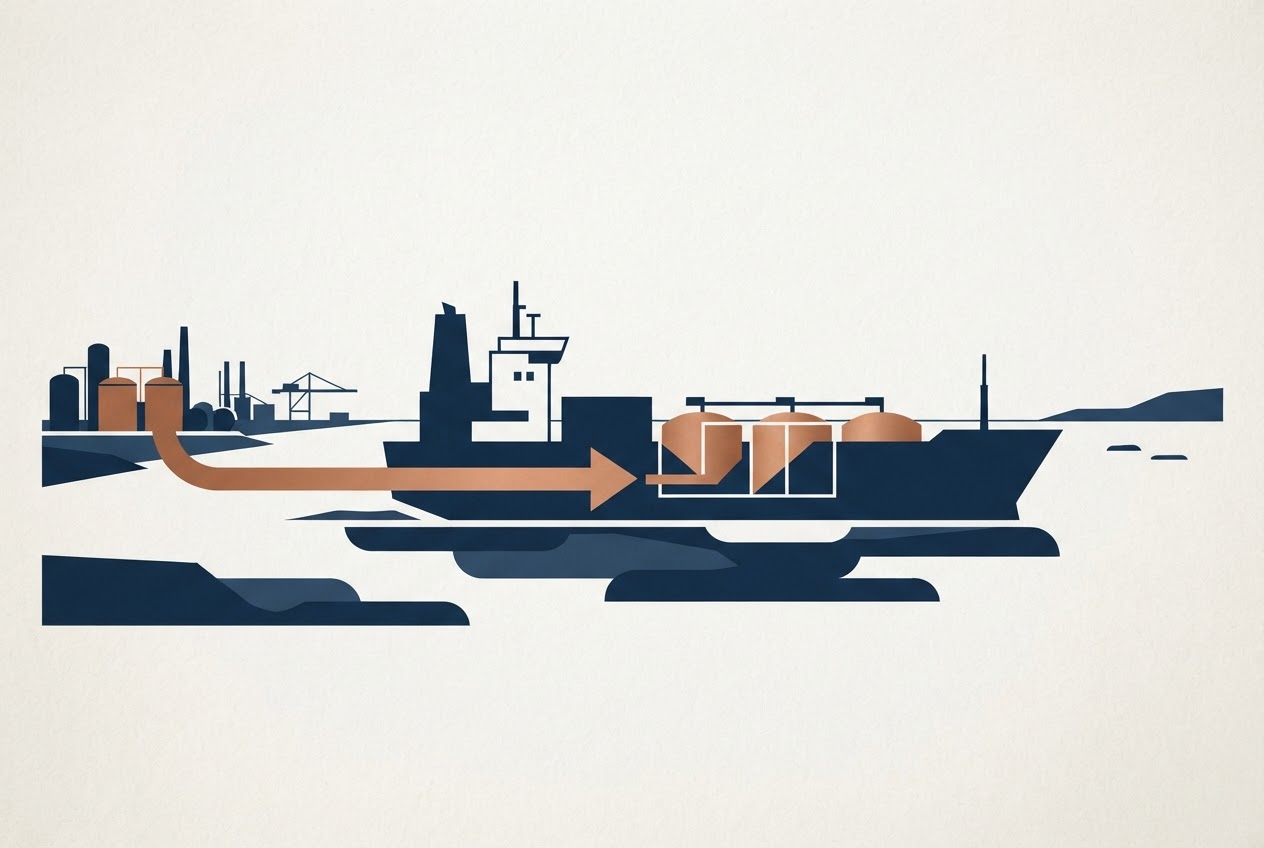
US ethanol could help supply the expanding methanol-capable shipping fleet by using its engines and bunkering facilities with relatively minor changes, according to a study reported by Hellenic Shipping News. Published by the Maritime Ethanol & Methanol Alliance (MEMA), the report says ethanol could be used alone or mixed with methanol across more than 300 vessels operating or on order, while low-emission methanol availability remains limited.
The study, Marine Ethanol: Unlocking the US Opportunity, puts US annual production capacity at 18.5 billion gallons, compared with output of 16.4 billion gallons in 2025. That leaves approximately 2 billion gallons of unused capacity. The country accounts for slightly more than half of global fuel ethanol production and supplies about 80 export markets, predominantly through Gulf Coast terminals that also serve as major bunkering centres.
Against international shipping’s annual fuel consumption of roughly 300 million tonnes, valued at an estimated US$180 billion, the report sets out illustrative demand scenarios. Supplying 1% of that consumption by mass with ethanol would take about 1 billion gallons, within existing US spare capacity. A 5% share by the mid-2030s would require approximately 5 billion gallons.
Commercial activity is also developing. Hellenic Shipping News reported that Tangier Maersk received US corn ethanol through a commercial ship-to-ship bunker transfer in Houston on 28 September. The operation was described as the first publicly announced US ethanol bunkering of a deep-sea container vessel. The study assigns ethanol a technology readiness level of 8–9, indicating technical maturity with commercial use beginning to develop.
The report says ethanol almost eliminates sulphur oxide emissions compared with heavy fuel oil, while reducing nitrogen oxides by 40–94%, depending on engine technology, and particulate matter by 90–99%, without scrubbers. It estimates production costs below US$1 per gallon after co-product revenue. These are study findings, rather than quoted bunker prices.
MEMA is a platform of the Global Centre for Green Fuels. ABS supplied technical analysis and US producer Marquis Energy contributed industry input, while the recommendations remain MEMA’s. Centre managing director Clarence Woo identified standardised marine fuel specifications, feedstock traceability and reliable chain-of-custody arrangements as priorities for wider adoption. The report also comes ahead of an expected International Maritime Organization decision on next steps for its Net-Zero Framework at an extraordinary session on 4 December, following MEPC 85.