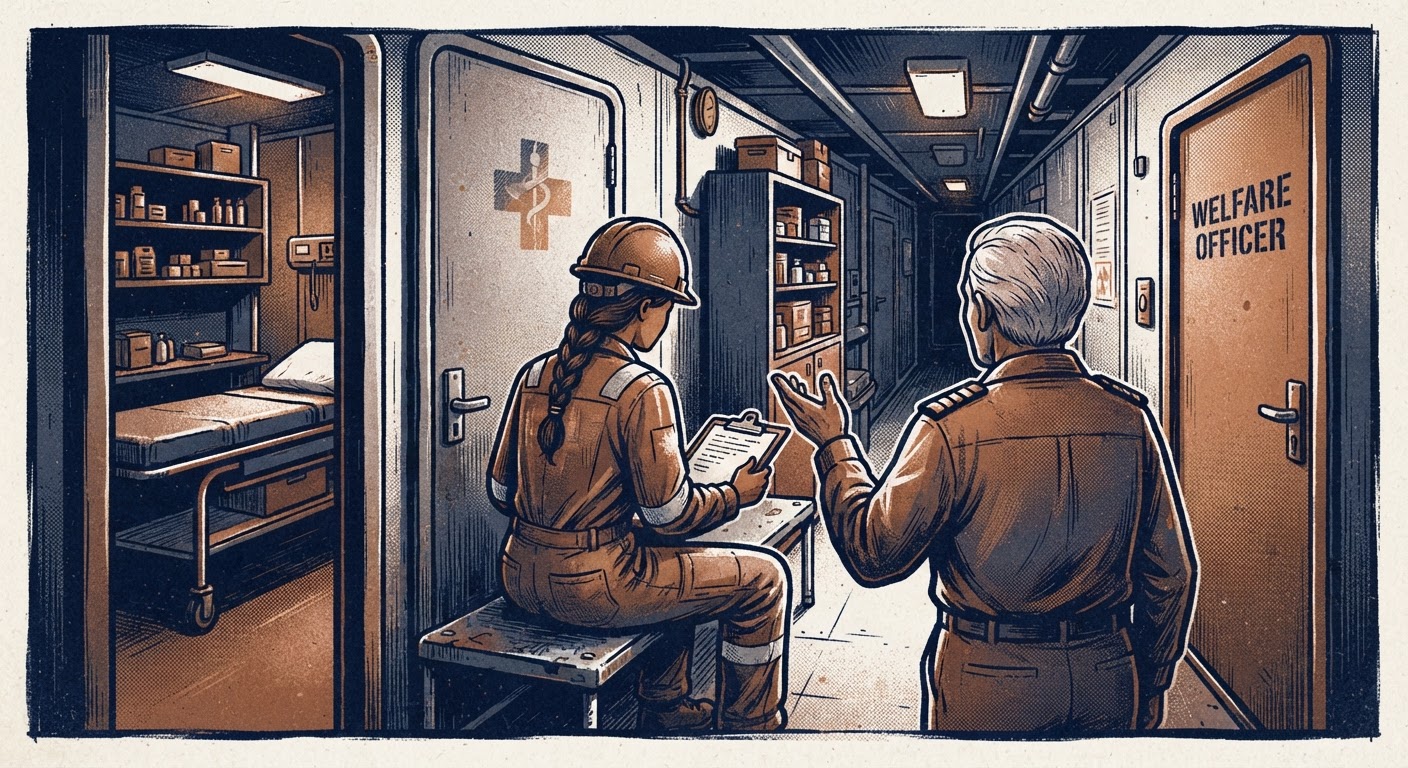
Shipping needs better onboard facilities, medical provision and employment support for women to strengthen crew welfare and operational safety, Dr Katherine Sinclaire argues in a contribution to Splash247. Sinclaire, senior medical advisor for aviation and maritime at MedSea, part of International SOS, says increasing female participation has not removed persistent barriers to working at sea.
The contribution cites the IMO Women in Maritime programme as putting women at 1.2% of the global seafaring workforce, equivalent to around 24,000 people. That represents growth of 45.8% since 2015. However, the IMO-WISTA 2024 survey found women remained poorly represented in technical and leadership positions, with employment concentrated in cruise and passenger shipping.
Employment bias and isolation remain significant concerns. According to the Global Maritime Forum survey cited by Splash247, 29% of women regarded gender bias as a major employment obstacle, against 0.4% of men. Sinclaire says women may be the only female crew member aboard, while fear of retaliation can discourage reporting of harassment. Long contracts, limited maternity arrangements and a shortage of flexible sea-shore rotations also complicate retention.
MedSea’s operational figures offer a separate view of healthcare demand. Women accounted for almost 3% of cases opened in 2025, an increase of more than one-third compared with previous years, according to the contribution. Musculoskeletal conditions represented 6% of female cases, versus 15% among men. Women required fewer referrals ashore, and their repatriation rate was half the male rate. Sinclaire says these outcomes indicate that many conditions could be treated aboard or with telemedical assistance.
Practical shortcomings include inadequate private accommodation, bathrooms and changing spaces, inconsistent supplies of sanitary products and poorly fitting protective equipment. Splash247’s contribution notes that the 2022 Maritime Labour Convention amendments require appropriately fitting PPE for all genders. It also points to STCW Code amendments effective from January 2026 requiring training to prevent and respond to violence and harassment, including sexual assault.
Sinclaire calls for gender-sensitive telemedical protocols, confidential psychological support and reporting channels, better shipboard infrastructure and stronger career pathways. She also identifies maternity support, mentoring and flexible employment policies as priorities, framing improvements as essential to workforce sustainability as well as individual wellbeing.