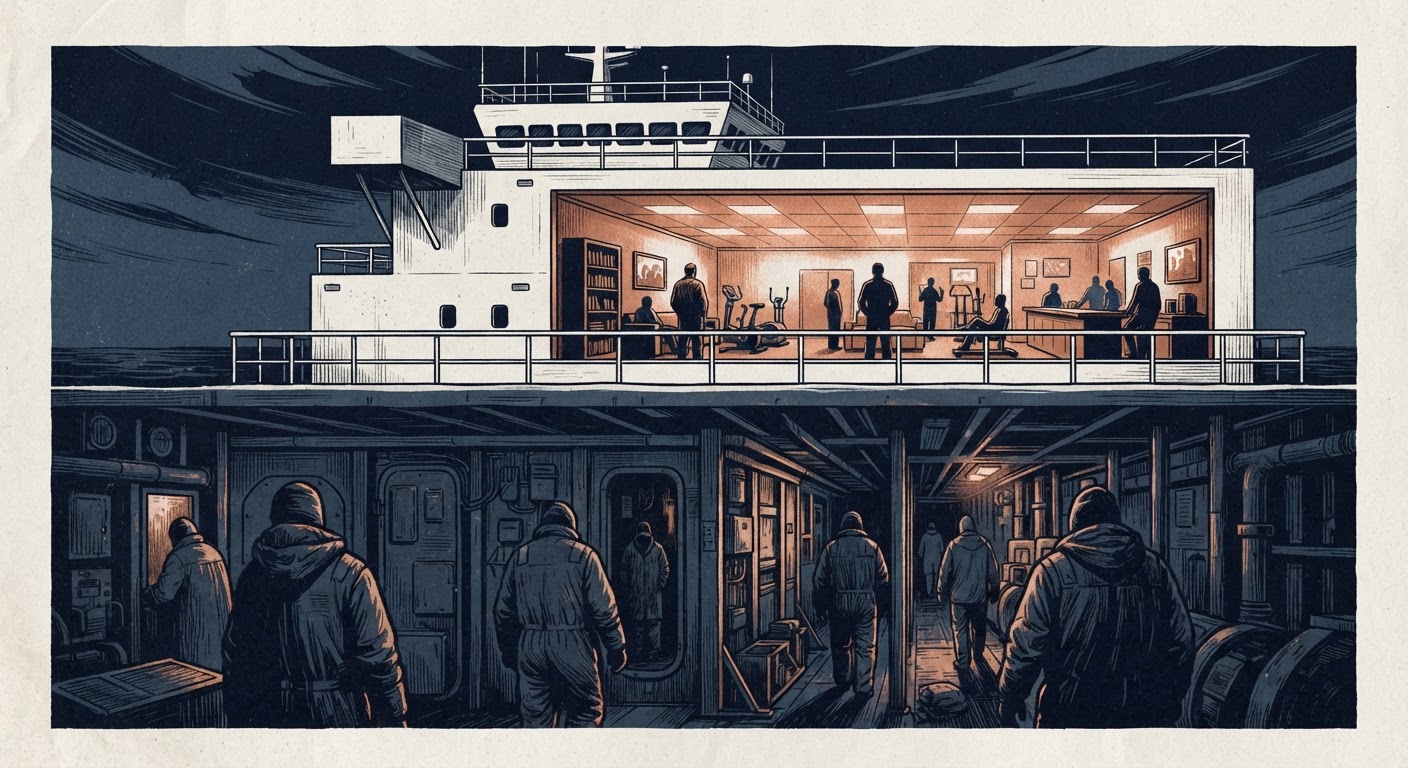
Improvements in crew welfare among participating ship operators are not yet reflected consistently across the wider industry, according to a report covered by Hellenic Shipping News. Five Years into the Code of Conduct: What’s Changed for Seafarers? contrasts progress in company self-assessments with seafarers’ accounts of continuing shortcomings in employment conditions, staffing and wellbeing.
The report brings together three previously unpublished data sources: RightShip’s Crew Welfare Self-Assessment (CWSA) and two seafarer studies commissioned for the review. More than 1,000 companies, representing over 13,000 vessels and about 300,000 seafarers, have completed the self-assessment against the Code of Conduct. Participation is also extending beyond the largest operators, according to the report.
Fair employment terms were among the strongest areas in the company assessments, with attainment of 90%. Among surveyed seafarers, however, 76% reported that wages were always correct, complete and punctual. Crewing showed a similar contrast: CWSA participants recorded 88% attainment, while only 49% of seafarers said staffing on their latest contract had been sufficient for safe work without excessive fatigue or breaches of agreed rest hours.
The findings also pointed to limited confidence in reporting problems. Just 59% of surveyed seafarers said they would feel safe raising a serious concern without fearing consequences. Crew wellbeing had the lowest attainment among the assessment areas covering owners and operators, at 76%, although the report identified improvements. The proportion of participating companies charging for internet access declined from 18.4% in 2024 to 8.5% in 2026.
Mental-health training among participating owners and operators increased from 64% to 76% since 2024. Yet only 56% of surveyed seafarers said free mental-health support or confidential counselling was available and that they would feel safe using it. A further 17% had access but felt unsafe doing so, while 27% had no access.
The report urges charterers, cargo owners, insurers, financiers, regulators and flag states to incorporate crew welfare into commercial and regulatory decisions. Sustainable Shipping Initiative chief executive Ellie Besley-Gould argued that business awards, insurance cover and access to capital should reflect welfare standards, with the next five years focused on extending leading operators’ practices across the industry.